Posted by: beer_scientist on February 1st, 2012 with 15 Comments
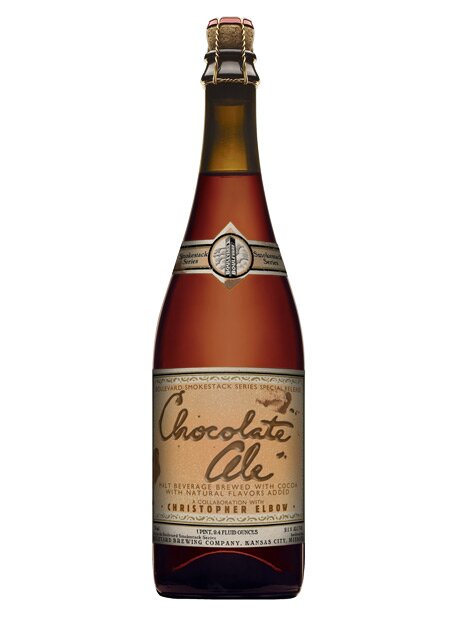 This post is about Chocolate Ale and a respectful advocacy for Boulevard. Please know that we are hoping for a respectful conversation to take place here. Remember, craft beer still represents a small portion of the total beer sales in the world.
It’s a great time to be part of the Kansas City beer scene. People here are getting more and more enthusiastic about beer. In fact, I am frequently running into folks who are having the “this is beer” epiphany. The fever-pitch has peaked, it seems, surrounding their Chocolate Ale. Perhaps all of this points toward a paradigmatic shift in the love of craft beer. More on that momentarily.
A few months back, during our fund-raising efforts, the Pitch ran a story on the beer scene in Kansas City. To no one’s surprise, and rightly so, they spoke in length about the pivotal role that Boulevard Brewing played in upping the beer culture in this city. I would also note that upping the beer culture has gastronomic implications as well (i.e., good food spots with good beer).
I remember the days when I lived in Springfield (MO) and before I myself even brewed (let alone pursued opening a brewery), when I would get a Boulevard Wheat on tap, look forward to a Nut Cracker Ale, or tipple an Amber or two. This was before the Smokestack Series days. Boulevard was often the lone respite from macro beer oblivion. And I truly appreciated what I could get.
Time went on and the Smokestack Series came out. I had my first exposure to it right before my move to California. I traded some other brews with a woman named Carrie at Kahn’s in Indianapolis for a couple Smokestacks. During the move, I stopped and stayed with a friend in Springfield. Of course, I had to visit Brown Derby International to purchase some more Smokestack stuff. Some of the beers I purchased were new, and I hadn’t heard of them. Sometimes life is about fortuitous occurrences, and I am glad when I have them.
So, I’ve got a long standing history with Boulevard…about 10 years. Many people out there have an even longer history with drinking Boulevard. Some probably remember when it was exclusively at this or that location. I would venture to say that Kansas City itself has an impression of the Boulevard’s history stamped on it as well.
By all accounts, people in this area have a positive history with Boulevard. Everyone I’ve spoken with has a positive antecdote along the lines of “they have had the same people there the whole time,” “they’ve kept the same group of investors,” “they really raised recycling awareness in the city”… I could go on and on.
Bottom-line is that Boulevard Brewing has, for a long time and consistently, given people in Kansas City and awesome experience. There is a positive and long-standing history of their presence.
Why set-up so much stuff preliminarily to get to the point? Well, I think it adds some perspective (both historical and immediate) to this Chocolate Ale thing. It also points out that Boulevard, it seems, has always acted with the best intentions and is community-minded.
So, why is there such criticism from folks when they didn’t get the Chocolate Ale? ”Boulevard handled it badly,” etc., are the sort of criticisms I’ve seen.
Well, I don’t presume to know the logistical methods that Boulevard employed on their Chocolate Ale. I also presume that they didn’t dictate to retailers how to deal with their allotments. What I do presume is that they did their best and didn’t intentionally deprive anyone. If some feel it could have gone better, then that is for them to say. However, overt anger and pointed disgust over not getting one’s hands on Chocolate Ale does seem a bit short-sighted given Boulevard’s otherwise sterling reputation.
Did some people hoard bottles? Sure! It that Boulevard’s fault, no! Again, they are in the business of making good beer, not determining the actions, behaviors, or attitudes of purchasers and retailers. That’s why I tried to add some perspective above. It is unfortunate that some got a lot and others got none. It is unfortunate that bottles will show up on Ebay for ridiculous prices. However, the wider ills of free market consumerism aren’t the fault of Boulevard Brewing.
There are have also been criticisms leveled concerning the notion that Boulevard should have released the beer to Kansas City first and then gone into secondary markets. Again, I don’t presume to know that marketing tactics and techniques that factored into the decision to be in other places first, etc. What I do know is that wider appreciation of Boulevard beers has afforded them the chance to make their beer more affordable to Kansas City. The more grains, hops, yeast, etc. they can buy, the more their purchasing power is upped. For that reason, you can regularly find their terrific Sixth Glass Quadruppel for the price of $7.99 (ridiculously cheap, in my opinion). So, while many of us would love only homegrown production, we have also enjoyed the boon of being able to buy their other beers at great price points.
That may not be consoling to many folks, but it is to me.
I’ve also noted in this discussion that some have said that Boulevard’s heads have gotten too big. Have you met John, Steven, Jeremy or some of the other Boulevard folks? I have, and I can tell you this is demonstrably untrue. Sure, they’ve gotten recognition, but little of it (if any) is by way of self-proclamation.
But let’s assume that everything levied at the lack of Chocolate Ale were true. Let’s say that they only got it to K.C., that they only let people purchase one bottle, they they didn’t take interviews that created more buzz, that the logistics went perfectly, and that every last iota of the process went off without the proverbial hitch. There is still the issue of supply.
It appears that demand far outstripped the supply. I gather that more and more and more could have been made. But then what about that one person or, tenth, hundredth, thousandth, who didn’t get it. There will invariably be a complaint from somewhere. In the end we are imagining Anselm’s Ontology or the Perfect Island when we say everything could have been perfect. I myself have been on the losing end of scoring some BBQ or Rye on Rye, along with dozens and dozens of other beer from other breweries…it happens.
This is a plea. Please do not denigrate Boulevard based on one beer. Remember that they will continue to make great beer and will do it to the best of their ability. Please, especially if you do not normally support Boulevard by purchasing their other beers, do not complain. How about trying some of their other brews instead? I mean no one is relegated to drinking Victory Gin in a world that equitably bad…I think I prefer the free market. Thoughts?
 In the past, I’ve not made it a secret that Lagunitas is generally hit and miss for me. Not that I’ve denigrated their brand…some of the beers just aren’t my (pardon the expression on a beer site) brand of vodka. As a result of my hot and cold attitude toward the brand, I leave her a bit befuddled when I wax and wane between praise and disappointment. Tongue-in-cheek anthropomorphic painting of the the brewery aside, it is generally a coin flip as to whether I’ll purchase a bottle of something.